
You know that first cup in the morning? When the smell of coffee creeps into the kitchen and brings a sense of calm. But then suddenly it doesn't taste the same. There's something... a little bitter? Then maybe it's not the beans that have let you down, but the coffee maker itself.
Cleaning coffee machines is one of those things you know you should do - but often forget until the flavour tells you to. And then it's already high time.
Why it is important to clean the coffee maker
Coffee machines accumulate deposits, limescale and old coffee residues. The more you brew, the more it settles inside the machine. The water leaves behind limescale, and heat plus moisture creates an environment where bacteria can thrive.
Three clear reasons to clean regularly: the flavour improves, hygiene improves, and the machine lasts longer. It's a win-win.
How often should you clean your coffee machine?
The simple answer: more often than you think.
If you use your brewer every day, you should do a quick cleaning after each use. The deeper cleaning, where you remove limescale and deposits, should be done about once a month - or more often if you have hard water.
🧼 How to clean coffee makers with vinegar or citric acid - step by step
Cleaning your coffee maker doesn't have to be complicated. Here's a simple step-by-step guide:
- Empty the coffee maker: Remove the filter and empty the jug.
- Mix the cleaning fluid: 1 part vinegar + 3 parts water, or 2 tbsp citric acid in 1 litre of water.
- Fill the water tank: Pour the mixture into the container.
- Start the brewing process: Without coffee or filter.
- Pause halfway: Leave to stand for 10-15 minutes.
- Finalise the brewing process: Run again so everything flows through.
- Rinse twice: Brew with clean water twice.
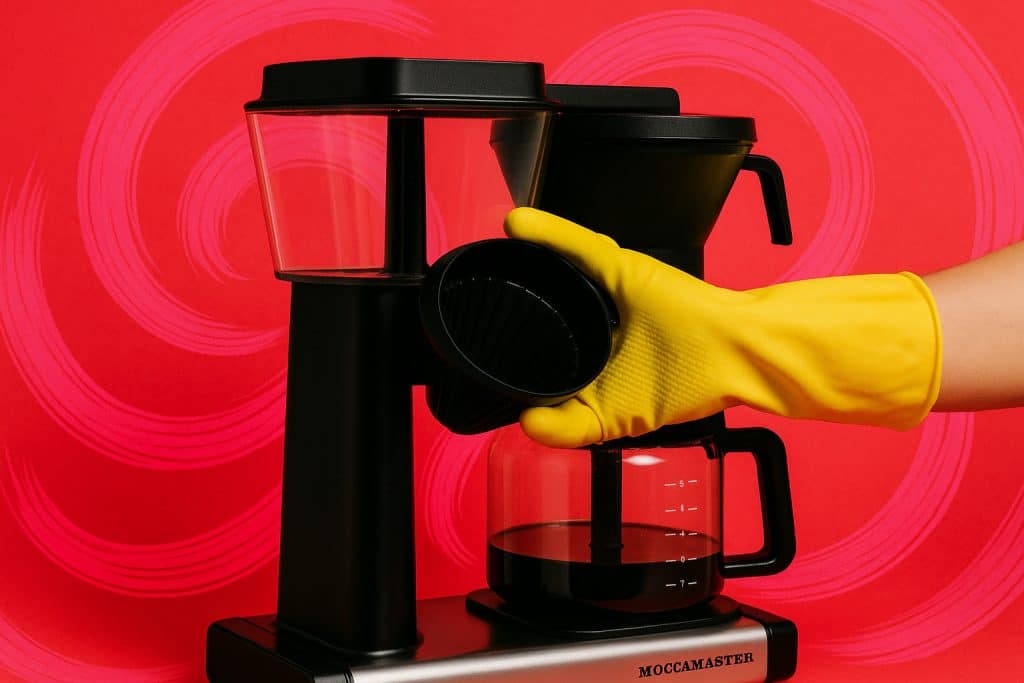
- Wash the parts: Clean the filter holder and jug by hand.
Common mistakes (and how to avoid them)
Many people think that rinsing out the jug is enough, but the inside is where the problem lies. Others use vinegar that is too strong, which can damage gaskets or leave odours. And some forget to rinse properly afterwards, so the coffee tastes sour. Easy to miss, easy to fix.
Vinegar or citric acid - which is best?
Vinegar is effective and cheap, but smells strong. Citric acid is milder, smells fresher and is gentler on plastic. Do you have a modern brewer with lots of plastic parts? Go for citric acid.
Quick tips - when you don't have time but still want to do the right thing
- Rinse out the jug immediately after use
- Discard the filter on the same day
- Wipe down the outside every week
- Descale every month
- Always run two rinses after cleaning
Frequently asked questions - quick and clear
How do I know my coffee machine needs cleaning?
The flavour changes, the machine makes more noise, or there is a sour smell from the water tank.
Can you use baking soda?
No, it does not dissolve lime. Stick to vinegar or citric acid.
Can I run dishwasher detergent through the brewer?
No, it foams and often leaves residues that affect the flavour.
Does it work for capsule machines?
Some steps do, but always check the manufacturer's recommendations.
A clean coffee tastes more than it sounds
Cleaning the coffee maker is not just for the flavour. It's a simple routine that pays big dividends. For every cup that tastes just right, both you and your brewer will thank you. Make it a habit - it pays off every morning.
Want to take your coffee habits to the next level? Check out our guides on how to descale your coffee machine correctly and what you can do with coffee grounds instead of throwing them away. Two clever clean hacks that save on flavour, machinery and the environment.